
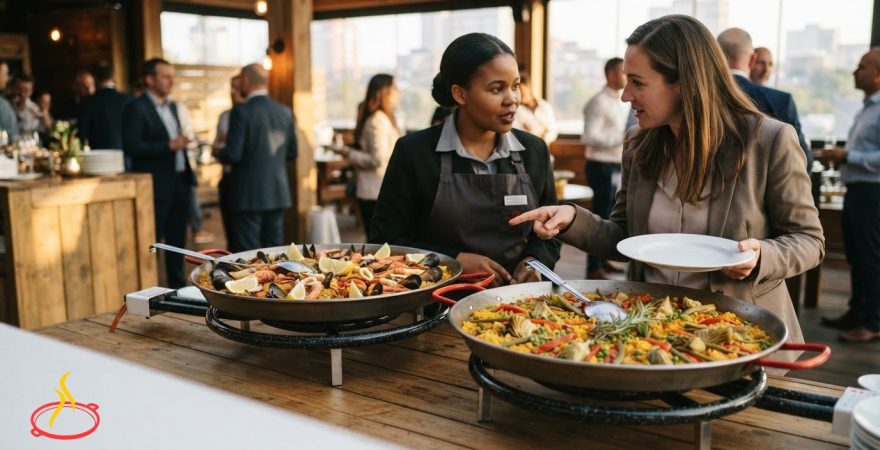
A safe event meal starts before the menu is set. To handle food allergies at an event, collect each guest’s specific allergy information during registration, share it with the caterer in advance and plan how dishes will be prepared and served separately. Ask guests to name their allergens rather than relying on a general list of 14.
It’s natural to focus on the menu, but clear communication matters just as much as careful cooking. This guide explains how to give guests a straightforward way to disclose allergies, share useful details with the catering team and reduce cross-contact during preparation and service. It also covers how to make allergy information visible on the day, so guests can make informed choices.
Table of Contents
1. Collecting guests’ allergy information during registration
A practical answer to how to handle food allergies at an event starts with the RSVP form. Ask guests to name each food allergy, explain the precautions they need and share any concerns about “may contain” warnings. Record dietary restrictions separately: gluten avoidance, for example, may have a different cause from a wheat allergy.
Collect details early and pass them in writing to the event organiser and catering team before menu planning. Include the guest’s name, specific allergen, relevant cross-contact concerns and a contact method for follow-up. Once seating is arranged, add the guest’s name and table number to the request so service staff can identify the correct meal discreetly.
At events, organisers should ask caterers to clearly identify allergens in the food they provide. Organisers should communicate ingredient information clearly rather than relying on broad labels such as “dietary” or “allergy-friendly”.
Planning how to handle food allergies at an event also means involving guests in menu choices. Ask which dishes might suit their needs, then discuss ingredients and preparation with the catering team. A vegetarian meal, for instance, may still contain dairy, egg or nuts. Adapt a dish only if its ingredients and preparation can meet the stated restrictions. Otherwise, plan a separate alternative and explain its ingredients clearly.
Agree on emergency steps before the event. Guests at risk of a severe reaction should bring their prescribed epinephrine auto-injector; staff should know where it is and how to contact emergency medical services. Share the guest’s action plan with designated staff and make sure they know who will respond if symptoms occur.
2. Preventing cross-contamination
A practical plan for how to handle food allergies at an event starts with the catering team’s preparation controls. Ask how staff separate ingredients, equipment and serving utensils. For a severe allergy, discuss whether the trigger ingredient must be completely absent from the kitchen. The BBC notes that even traces of trigger foods can prompt life-threatening reactions, so removing nuts from a finished salad isn’t enough.
Use clean or dedicated chopping boards, knives, pans and utensils for meals prepared for guests with allergies. Clean and sanitise surfaces before preparation, prepare the meal separately, then cover and label it. Check every ingredient label, including products marked “may contain”, because recipes and brands can change. Don’t substitute an ingredient without checking it against the guest’s stated allergy.
Label dishes with their names and ingredients, and highlight allergens on menus or buffet signs. Keep meals prepared for guests with allergies separate, with dedicated serving utensils. If a buffet spoon touches another dish, replace it promptly. Staff should know what each dish contains and refer unanswered questions to the chef or manager rather than guess.
Tell event hosts, managers and serving staff about each allergy before service. Guests should also alert the server and manager when they arrive. For drinks, tell the bartender about the allergy and request clean tools, as equipment may be shared between orders.
Another part of how to handle food allergies at an event is preparing for anaphylaxis. Caterers should maintain an allergy-management policy that covers menu planning through service. Brief staff on emergency roles, keep action plans accessible and ensure key employees know the response procedures. Practise the response before the event so everyone understands their role.
3. Event registration and advance allergy disclosure
Make the RSVP form the starting point for clear allergy communication. Ask attendees to disclose food allergies, dietary restrictions and preferences, then provide a private way to update details if circumstances change. Guests should be able to name the trigger and describe what they need to eat safely, rather than choose a vague “special meal” option.
Set a response date that gives the organiser time to plan, then send the catering team a written summary of requests. Share menu options with attendees before the event, so guests can flag concerns about ingredients, utensils or preparation. For a large event with more than 150 guests, give dietary requirements extra attention during planning.
Once the table plan is complete, match each request to the guest’s full name and table number. Meal cards can help staff identify pre-requested dishes without asking guests to explain an allergy in a busy queue. Keep the information consistent across the registration record, catering notes and service plan.
Include food allergies and dietary needs in catering requests, then communicate any changes promptly. Ask the catering team to consider the full menu, including drinks that may contain an ingredient relevant to an allergy. This gives staff a practical reference during service and helps prevent confusion if a guest reports an allergic reaction or risk of anaphylaxis.
For a coordinated event plan, share your event and dietary requirements with the team.
Inform the catering company about known food allergies as early as possible. Share menu options with attendees before the event, and use meal cards to identify guests who have pre-requested specific meals.
PanYella Catering: Paella Catering
PanYella Catering brings Spanish-style paella and event catering to gatherings where a shared meal is part of the occasion. The menu also includes tapas and bruschettas, charcuterie boards, and churros with ice cream, giving you different ways to shape the table.
When planning an event, share guests’ allergy details and dietary requirements early in the menu discussion. Specific information about allergens helps the catering conversation focus on suitable choices and preparation needs. Don’t assume a vegetarian or vegan dish is automatically safe for someone with an allergy; the ingredients and cross-contact concerns still matter.
For events where paella is central, discuss the menu alongside the allergy information collected from guests. Contact PanYella Catering to talk about catering for your event.
Make guest care part of the occasion
Planning how to handle food allergies at an event means making guest care part of the menu conversation from the outset. Bring together the event’s atmosphere, the dishes you have in mind and the allergy details guests have shared. This provides a thoughtful starting point, rather than leaving dietary needs as an afterthought.
PanYella Catering offers Paella Catering, Tapas and Bruschettas, and Churros with Ice Cream. Share your event plans and guests’ requirements when discussing the menu, so those details can inform the conversation about food choices and preparation.
Ready to shape a Spanish-inspired meal for your gathering? Contact PanYella Catering about your event, and take the next step towards a welcoming table for your guests.
Frequently Asked Questions
Back to basics: What are the 14 allergens?
The commonly referenced list includes cereals containing gluten, crustaceans, eggs, fish, peanuts, soybeans, milk, nuts, celery, mustard, sesame, sulphur dioxide and sulphites, lupin, and molluscs. Treat this as a useful prompt, not a complete list of every possible trigger. In South Africa, ask guests about their specific allergies and share accurate ingredient information for each dish.
Is there an area in the kitchen that’s free of major allergens?
Some kitchens may designate a separate preparation area, but a separate space alone doesn’t establish that food is safe. Ask how staff manage ingredients, equipment, cleaning and storage for the specific allergy. For example, a chopping board used for bread could transfer traces to a meal prepared as gluten-free. Discuss severe allergies before choosing dishes.
What allergies need to be addressed?
Address every food allergy a guest discloses, not only those on a familiar allergen list. Record the trigger, the guest’s stated precautions and any concerns about cross-contact. Keep allergies distinct from preferences and other dietary restrictions: choosing to avoid a food does not carry the same safety implications as the risk of an allergic reaction.
How do you ask guests about food allergies and dietary requirements before an event?
Add a discreet question to the RSVP form, such as: “Do you have food allergies or dietary requirements? Please name the foods and precautions we should know about.” Include a private reply option for sensitive details. Give attendees a clear response date, then make it easy to update information if their needs change.
How do you plan an allergen-safe menu for an event?
Start with each guest’s named triggers, then review proposed dishes, sauces, garnishes and drinks against those needs. Ask the catering team to explain ingredient choices and preparation steps before settling the menu. Offer meaningful alternatives rather than assuming one vegetarian dish suits everyone. Clear dish descriptions help guests choose, while staff can keep ingredient details available for questions.