
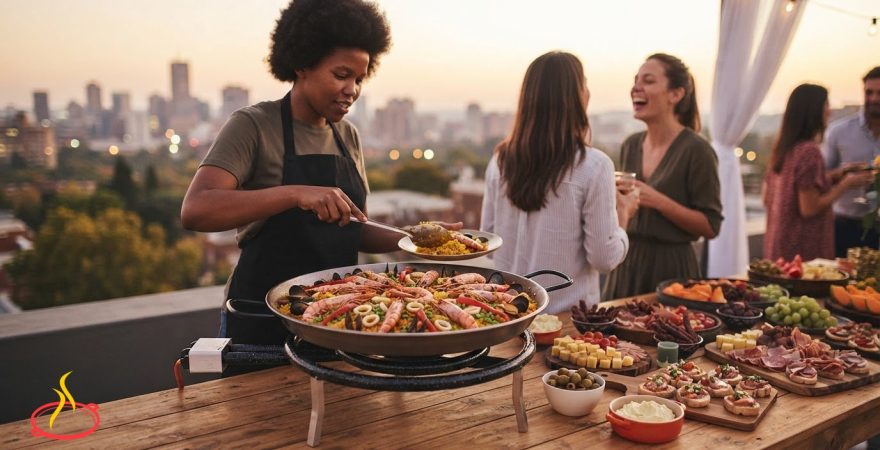
The menu is only one part of a successful gathering. Social event catering concepts bring together the occasion, guests, serving style and atmosphere, shaping how people experience the event around the table. A buffet, live cooking or shared dishes can each set a different rhythm for the celebration.
Choosing the right approach means balancing the mood you want with practical needs, from dietary options to the venue and service style. This guide explains what catering concepts involve and how to choose a menu, plan for dietary needs, personalise the experience and coordinate the details with a caterer.
Table of Contents
1. What exactly are catering concepts?
A catering concept brings the occasion, menu and service style together. Strong social event catering concepts connect cuisine, guest experience and atmosphere through one clear idea. For example, a garden gathering might pair relaxed service and simple decorations with a menu that suits the setting.
A buffet gives guests a designated place to serve themselves, while plated service brings courses to seated guests. Family-style meals put shared dishes on tables, and food stations let guests choose what they want or watch food prepared live.
Popular social event catering concepts for birthdays and parties include sharing platters, themed buffets and interactive stations. Weddings may suit a coordinated seated menu or a generous buffet, depending on the formality and pace of the celebration.
Quality ingredients, balanced flavours and thoughtful presentation all help make a meal memorable. Shared dishes can bring guests together, while food linked to a family or cultural tradition can honour the occasion. Where suitable, use biodegradable plates and reusable utensils, and plan portions carefully to reduce waste.
A participatory format can make the meal part of the event, rather than simply something served to guests. Interactive food stations let guests customise their meals and encourage mingling. Live cooking, DIY dessert stations and make-your-own mixology bars are possible ways to involve guests. With live cooking, guests can also watch food being prepared.
For a themed gathering, menus can use authentic flavours, special ingredients and creative food presentations. Event hosts can use food presentation to make a themed meal more special, carrying the concept through to what guests see on the table. Eco-friendly catering practices include using biodegradable plates, reusable utensils and minimising food waste; these choices can be considered alongside the menu and service approach.
2. Menu selection and dietary requirements
Build the menu around the event’s pace, guest preferences and dietary requirements. For a relaxed gathering, a buffet can include starters, mains, sides and desserts. A seated dinner calls for courses that work well together, such as a crisp salad followed by a rich, savoury main.
Remember to include vegetarian, vegan and gluten-free choices, alongside dishes for guests with allergy-related needs. These aren’t interchangeable categories: a vegan dish contains no animal products, whilst vegetarian guests may eat some animal-derived ingredients. Keep dish descriptions clear so guests can identify suitable options.
For example, a menu might pair a meat-based main with a plant-based alternative, seasonal vegetables and a dessert suited to more than one dietary preference. Label dishes and list key ingredients so guests can make informed choices. For allergies, consider ingredients across starters, mains and desserts, not just the central course.
Choose variety to suit the occasion rather than adding dishes for their own sake. At a birthday buffet, familiar favourites can sit alongside a distinctive dish. At a wedding, complementary courses can create a more composed meal. Plant-based options can be satisfying dishes in their own right, not simply sides.
Share the occasion, guest preferences and dietary requirements when shaping the menu. A menu planning conversation can help bring those details together, from course balance to clearly presented alternatives.
A caterer can coordinate setup and cleanup and tailor the menu to the event’s theme and dietary needs. Whatever the format, a considered selection helps cater to different tastes and requirements.
3. Planning, personalisation and hiring caterers
Start with the purpose, date, venue and theme. A garden birthday, for example, needs a different service plan from a formal wedding reception. Share the estimated guest count, schedule and dietary requirements with the caterer so the menu, staffing and preparation can be planned together.
In South Africa, plan food preparation and service around applicable food-safety requirements and the venue’s conditions. If alcohol will be served, include the venue’s rules and any applicable liquor-licensing requirements in the event plan.
Booking time depends on the event’s scale, date, venue and menu complexity. Start planning once the date and venue are settled, and share an estimated guest count early. Confirm the final number as attendance becomes clearer, since it affects ingredients, portions, staffing and equipment.
Match the menu to the theme through ingredients and presentation, not just decoration. For a Spanish-inspired celebration, tapas and paella create a coherent menu; a garden gathering might feature seasonal produce and relaxed service. A signature dish, such as a family favourite or regional speciality, can add a personal touch. If you often draw event inspiration from travel abroad, concierge services such as healthtravelsconcierge.com offer tailor-made city tours and personalised experiences to help you discover authentic local cultures firsthand.
Plan practical details alongside the menu. The service style determines whether guests need seated tables, a clear buffet route or space around a live cooking station. The venue layout, access to preparation space and serving schedule also shape equipment and staffing needs. Coordinate these elements with the menu and event flow.
Share your event date, venue, guest estimate and preferred style to begin shaping a tailored plan. Discuss your event catering plans.
PanYella Catering: Catering for Large Events
PanYella Catering brings Spanish-style catering to events in Johannesburg and Pretoria, with paella at the centre of a menu that can include complementary dishes. It suits occasions where you want a shared meal and a live cooking focal point that complements the atmosphere.
Build the menu around paella, then add tapas and bruschettas. Churros with ice cream can provide a sweet finish. Together, these dishes create distinct courses and varied flavours while keeping the food concept cohesive.
As you plan, share the event format, venue, guest estimate and any dietary requirements. These details help shape a menu suited to the gathering. For a celebration where food is part of the experience, contact PanYella Catering to discuss your event.
Give your gathering a flavour of its own
The most memorable events feel considered from the first invitation to the final plate. Let your social event catering concepts express what matters about the occasion, whether that is a relaxed welcome, a lively shared experience or a polished celebration. A clear brief gives the menu and service style purpose.
As you turn ideas into arrangements, consider the atmosphere you want guests to remember. PanYella Catering can shape the food around your event with Spanish-inspired paella, tapas, bruschettas and churros with ice cream. Share your occasion, venue and preferences to request a quote.
Contact PanYella Catering to discuss your event, and start creating a gathering guests will remember fondly.
Frequently Asked Questions
What exactly are catering concepts?
A catering concept is the overall idea guiding the food experience, from its culinary theme to how preparation becomes part of the occasion. To shape one, connect the event’s character with a recognisable cuisine or feature. For example, a Spanish-inspired celebration could centre on paella, with live preparation creating a focal point for guests.
What food and drink menus work best for different social events and guest counts?
The occasion and serving pace matter as much as the guest count. A cocktail party suits easy-to-hold bites, while a family gathering can centre on shared dishes. For a larger celebration, a focused menu can help service flow smoothly; for a smaller dinner, distinctive courses can make the meal feel intimate. Choose drinks that complement the menu.
What catering options suit vegetarian, vegan, halaal, kosher and allergy-related dietary needs?
Vegetarian and vegan guests can be served dedicated paella options, and halaal catering is available on request. Kosher requirements and allergies need specific menu planning: state the required standard or affected ingredients clearly, rather than describing them only as special dietary needs. This gives the event menu a precise brief and helps guests understand which dishes suit them.
What are current catering trends and creative presentation ideas in South Africa?
Trends include sustainable sourcing, plant-based menus and interactive food experiences. Creative ideas include colourful bruschettas on boards, build-your-own stations with separate toppings, and dessert toppings guests can choose themselves.