
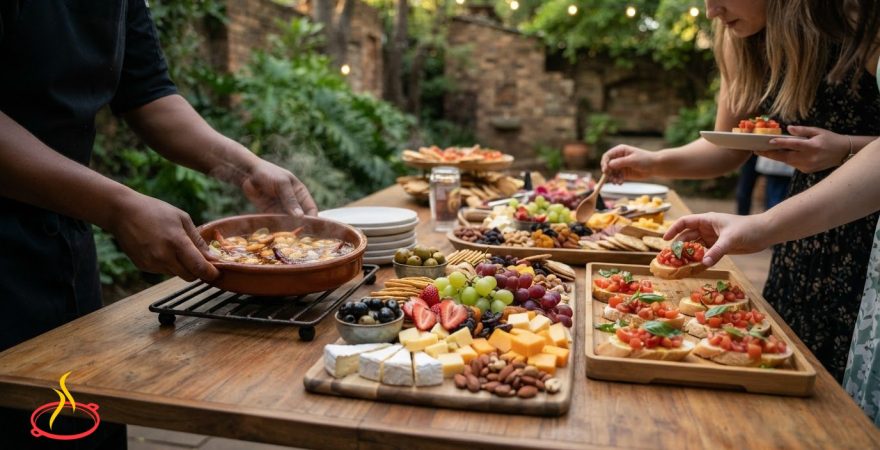
A well-paced tapas menu is planned around service, not simply a pile of recipes. To understand how to create a balanced tapas menu, start with dishes that can be prepared ahead, then serve hot bites in rounds so they arrive at their best. Cold selections and grazing boards can welcome guests; freshly cooked tapas bring warmth and aroma later. For a one-hour cocktail reception before dinner, plan roughly four to six tapas pieces per guest. When tapas are the main meal over two to three hours, eight to 12 pieces per guest is a realistic starting point, depending on portion size and richness.
It’s natural to wonder whether preparing ahead means sacrificing freshness. It doesn’t: the menu and service plan work together, with advance preparation for suitable dishes and careful timing for those best served hot. This guide explains how caterers balance temperature, flavour and texture, pair familiar bites with distinctive Spanish choices, and tailor the selection to your occasion and service style. The result is a tapas table that feels generous, varied and beautifully paced.
Table of Contents
1. Balancing hot and cold tapas, textures, and flavours
A balanced selection moves between cold and hot dishes, crisp and soft textures, and lighter and richer flavours. A caterer can plan a welcome bite, cold selections, hot tapas, a vegetarian option and a centrepiece. For example, olives and fresh tomato bruschetta can lead into sizzling gambas pil pil, cooked quickly with olive oil, garlic and chilli. Serve bread with the prawns so guests can enjoy the fragrant oil, too.
Contrast matters as much as temperature. Chorizo brings salty, spicy and sweet notes, while figs with cheese and honey offer a gentler finish. Patatas bravas add crisp edges and a lively sauce; a cool salad or tender cheese brings another texture. These combinations keep each bite distinct, rather than making the spread uniformly rich or fiery.
Meat, seafood, vegetarian and vegan choices can sit together through separate dishes, not one option expected to suit everyone. A caterer might pair chorizo or another meat bite with seafood, then include vegetable-led tapas and a fully plant-based selection. The tapas and bruschettas menu can also make room for familiar and more distinctive flavours.
Dietary requirements and allergies shape ingredient choices and preparation. A caterer can plan alternatives around guests’ stated needs, keep ingredients distinct, and make dishes easy to identify at service. For a fresh, locally minded tapas menu in Johannesburg or Pretoria, seasonal tomatoes, peppers and fresh herbs are practical ingredients to consider. What is readily available depends on the season and local supply, so build around ingredients in season rather than relying on one fixed recipe.
2. Mixing familiar dishes with distinctive Spanish options
Classic Spanish tapas include patatas bravas, ham croquettes and Manchego cheese. These familiar choices give guests clear flavours to enjoy, while Spanish omelette adds a softer, more substantial bite. Made with potatoes and caramelised onions, it brings sweetness and savoury depth to the spread. Serve it in small slices so guests can sample it alongside other plates.
Tapas are small plates meant for sharing, not a single large main course. Combine a recognised favourite, such as patatas bravas, with a less familiar Spanish preparation. This contrast lets guests explore new tastes without making the menu feel unfamiliar from the first bite.
Cured ham and Spanish cheese bring concentrated, savoury flavours. Pair them with milder local cheeses for a gentler counterpoint, and vary the accompaniments with bread, olives or fruit. A ham croquette adds a crisp exterior and creamy centre, while a slice of omelette offers a softer texture. Together, these dishes bring richness and variety to the table.
Distinctive choices should complement, not crowd out, familiar ones. For a small function, a caterer can shape a tapas menu for your occasion around the guests’ tastes, balancing recognisable plates with Spanish character. The aim is a varied sequence: crisp, soft, mild and savoury, with each small plate adding something different.
A selection of mild and cured local cheeses can round out a tapas spread, balancing gentle flavours with more concentrated ones.
3. How a caterer chooses tapas for the occasion and service style
Let the occasion shape the menu before choosing individual ingredients. A formal seated meal can suit shared platters, while a lively reception calls for portions that are easy to carry. For a standing event, prioritise bites guests can enjoy without cutlery. This keeps service smooth and lets guests move comfortably through the room.
Service style also guides presentation. Mini bowls or cups make saucier tapas easier to manage, while boards work well where guests gather to share. Manchego with bread is easy to pick up; a more delicate bite may need an individual serving. Match each dish to its setting so the presentation supports the experience instead of complicating it.
An important part of how to create a balanced tapas menu is matching the service pace to the event. For a relaxed gathering, dishes can come out gradually; a shorter reception calls for a more concise sequence. The plan should also account for kitchen access, the event schedule and which dishes need finishing close to serving.
The caterer’s approach to how to create a balanced tapas menu also accounts for guest movement and the room layout. A spread near the gathering area can encourage sharing, while staggered serving helps prevent crowding around one table. Share your occasion and preferred style of serving when you plan your tapas catering.
PanYella Catering: Tapas and Bruschettas
PanYella Catering can include tapas and bruschettas in a menu shaped around your occasion in Johannesburg, Pretoria and surrounding areas. Pair them with charcuterie boards for a grazing-style welcome, or serve them alongside paella as part of a fuller meal. Churros with ice cream make a sweet finish.
The right combination depends on your event, preferred service style and the balance of dishes you have in mind. Share those details to shape a menu that moves naturally from first bites to a satisfying centrepiece, with Spanish flavours woven through each course.
For a tapas menu planned around your gathering, contact PanYella Catering.
Shape a menu around your gathering
Let the occasion set the mood for the food: a relaxed celebration may call for generous shared plates, while a polished reception benefits from a more measured flow. Planning how to create a balanced tapas menu starts with the atmosphere you want guests to remember, then turns that feeling into a menu with a clear sense of occasion. PanYella Catering brings that vision together with Tapas and Bruschettas, Paella Catering and Churros with Ice Cream, creating a Spanish-inspired experience from savoury opening bites to a sweet finish.
Share the occasion, preferred service style and the flavours you’d like guests to discover. Those choices give the menu its direction and personality. Contact PanYella Catering today to start shaping a memorable gathering around the food.
Frequently Asked Questions
Can a caterer prep tapas ahead of time?
Yes, a caterer can prepare suitable components ahead and finish certain dishes closer to serving. Ensaladilla Rusa can be made in advance and served with Picos De Pan breadsticks; gildas can be prepared and kept chilled until guests arrive. For pan con tomate, prepare the components ahead, then toast the bread shortly before serving. Serve gambas al ajillo immediately after cooking.
How many tapas should a caterer serve per person?
For a one-hour cocktail reception before dinner, plan roughly four to six tapas pieces per guest, alongside grazing items such as olives, cheese and bread. If tapas are the main meal over two to three hours, eight to 12 pieces per guest is a realistic starting point. Portion size and richness affect how filling each piece is.
What should a caterer serve with gambas al ajillo?
Serve bread with gambas al ajillo so guests can enjoy the garlic-infused oil as well as the prawns. Small slices or mini toasts are practical for a standing reception, while bread on a shared plate suits a seated meal. Time the prawns to be served straight after cooking to preserve their freshly cooked appeal.
How many tapas dishes should a caterer serve per person?
For a light tapas spread, plan three to four tapas servings per person; for a fuller meal, five to seven can be a useful guide, especially when the menu includes a warm dish such as shrimp. These are servings, not a fixed number of different recipes. Consider how substantial each dish is, how long guests will be eating, and whether other grazing food will be available.
How does a caterer balance hot and cold tapas?
Start with cold dishes, then serve hot tapas in planned rounds so each temperature has its moment. For example, follow chilled olives and a cold salad with freshly cooked prawns, then bring out another hot bite. This approach also helps coordinate cooking and serving, rather than leaving every dish waiting on the table at once.