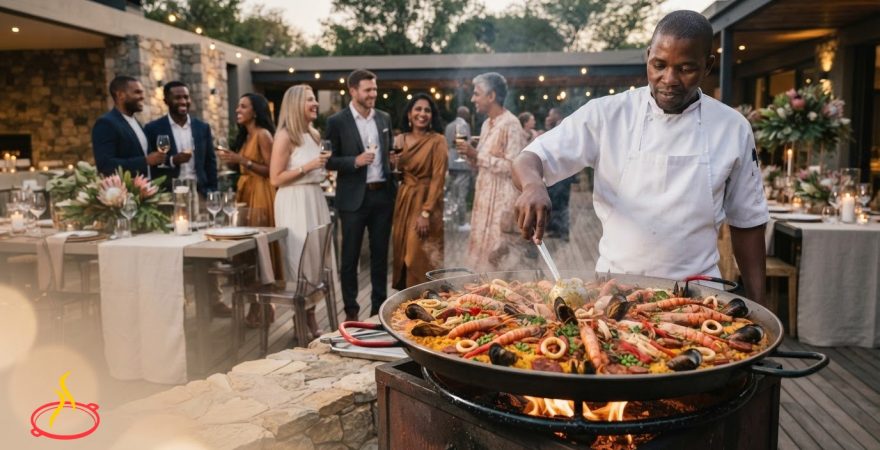
What if the food becomes a highlight without taking time away from the programme? A polished event depends on more than an appealing menu: guest numbers, dietary needs, venue access and service timing all need to work together. This event catering checklist for planners sets out what to confirm with your caterer and venue, from the first brief to event day.
A welcoming menu and smooth service can help keep a celebration’s rhythm intact. This guide covers guest preferences, setup space, access and serving flow. For events in Johannesburg or Pretoria, PanYella Catering serves Spanish-style food, including paella prepared on site, tapas, bruschettas, charcuterie boards and churros with ice cream.
Table of Contents
Before choosing dishes, give the event a clear shape. Use this opening checklist to gather the essentials:
- Purpose: What is the event celebrating or aiming to achieve?
- Date and venue: Where will it take place, and what access arrangements apply to the catering team?
- Guest estimate: How many people are expected, and when will you provide an updated count?
- Service window: When should food be ready, and how much time will guests have to eat?
Then picture the guest experience, not just the running order. Decide whether the atmosphere should feel elegant and composed, relaxed and sociable, or lively and interactive. Note practical priorities too, such as keeping a presentation on schedule or making it easy for guests to mingle. A clear brief gives the planner, venue and caterer a shared understanding of the event and helps prevent avoidable surprises on the day.
What should planners include in the first catering brief?
Record the event format, full venue address, arrival and setup access, programme timings and estimated attendance. Explain whether guests need a seated meal, informal service or food available during networking. These decisions affect both the menu and the service flow. An overview of types of catering services can help you compare approaches before settling on one.
For example, a corporate reception where guests move between conversations calls for a different rhythm from a wedding meal built around a shared dining moment. Include venue details that affect setup, such as the route to the service area, available preparation space and distance to the guest area. This helps shape event catering in Johannesburg around the location and programme. The event catering checklist for planners starts with these practical details, then uses the atmosphere you want guests to remember to guide the menu.
Build an event catering checklist around guests, menu and service style
A menu works best when its components suit the occasion and the way guests will gather. Use this comparison to shape the conversation:
| Event format | Guest needs to consider | Menu structure | Service flow |
|---|
| Networking reception | Guests may be mingling and eating at different times | Tapas or bruschettas as lighter options | Food available across the networking window |
| Shared celebration meal | Guests gather around a central dining moment | Paella as the menu’s anchor | Coordinate serving with the programme’s meal break |
| Event with a sweet finish | Allow space for dessert after the main meal | Churros with ice cream as a closing treat | Serve after the main course, without crowding the schedule |
How can planners make the menu welcoming and well balanced?
Gather dietary requirements and preferences early, then organise them for menu planning. Record seafood preferences, vegetarian or vegan choices, and any other needs guests have shared. Distinguish allergies and other restrictions from preferences, and update the record as RSVPs come in. Planning around these details early makes it easier to discuss suitable dishes before the final guest count is set.
Seafood, vegetarian and vegan paella can each inform the menu. Choose a centrepiece, then select supporting dishes with a clear role: tapas or bruschettas can open an informal reception, while churros with ice cream can provide a celebratory finish. A focused selection gives guests variety without making the meal feel like a crowded sequence. Explore Spanish-style menu options as you consider the balance of dishes.
For an event catering checklist for planners, record each guest need beside the menu decision it affects, then share the organised summary with the caterer. To plan a Spanish-style menu for your event, discuss your catering brief with PanYella.
Event catering checklist for event day: coordinate setup, timing and service
On event day, a change to timing or access can affect the whole service. Use this run-through to keep the venue, planner and catering team aligned:
- Access: Confirm arrival time, entry point, parking or unloading arrangements, and the route to the preparation area.
- Setup: Walk through the cooking and preparation space, serving points and guest circulation. For on-site paella preparation, choose a cooking area that guests can see without obstructing movement.
- Service start: Tie food service to a clear programme cue, such as the end of speeches or the start of a networking interval.
- Guest flow: Keep the route to the food clear. Consider whether queues could block entrances, seating or other activities.
- Close-down: Agree when service ends and how the catering area will be cleared, so it does not interrupt the event’s final moments.
What should planners confirm with the venue before catering setup?
Map the arrival route, preparation space, guest circulation, serving points and timetable with the venue team. Name one event contact to share schedule updates and coordinate venue and catering teams. A single point of communication helps prevent conflicting instructions. For live cooking, include the cooking area in the walkthrough, not just the serving table. The event catering questions and answers below cover other practical planning queries.
For an outdoor event, agree in advance what happens if the weather changes the plan. Identify a sheltered alternative and consider how moving the cooking or serving area would affect access, guest movement and visibility. Share the revised layout with everyone involved.
A well-timed service should feel like part of the celebration, not a pause in it. To discuss your event requirements with PanYella, share your catering brief.
Shape the celebration around a confident catering plan
A thoughtful event catering checklist for planners is more than a list of tasks. It helps make the meal feel like a natural part of the occasion. Once the practical details are aligned, you can focus on the atmosphere you want guests to remember.
PanYella brings more than 10 years of industry experience to on-site Spanish-style catering for events in Johannesburg and Pretoria. Seafood, vegetarian and vegan paella offer different ways to create a shared dining moment around your guests.
Share your event plans with PanYella to start shaping a catering experience around your occasion.
Frequently Asked Questions
How far in advance should I organise catering for an event?
For a significant corporate event, begin planning at least six weeks ahead. For other celebrations, start once you have a likely date and venue, as these details guide the menu and service arrangements. Share an early guest estimate, then agree when you’ll provide updated numbers. This gives the catering plan room to develop without treating an initial estimate as final.
What information should I give an event caterer?
Share the event date, full venue address, access instructions, expected guest count and programme, including speeches or presentations that affect meal timing. Explain the atmosphere you’re aiming for and how guests will eat, such as seated service or food during a reception. Include a named day-of contact and flag any venue arrangements that could affect preparation or serving.
How do I plan catering for guests with different dietary needs?
Ask guests to share dietary needs when they RSVP, and keep the responses in one clear record. Distinguish preferences from allergies or other restrictions, and note which guests each requirement applies to rather than making assumptions. Pass updates to the caterer as they arrive, then make sure the final guest information reflects any changes before the event.
Can live cooking work at an outdoor event in Johannesburg or Pretoria?
Yes, live cooking can suit an outdoor celebration in Johannesburg or Pretoria when the cooking and serving areas fit the venue layout. Plan where guests can gather without blocking movement, and agree on a sheltered alternative if the weather changes. A clear backup location helps the team adapt while keeping the cooking experience visible and the event programme moving.